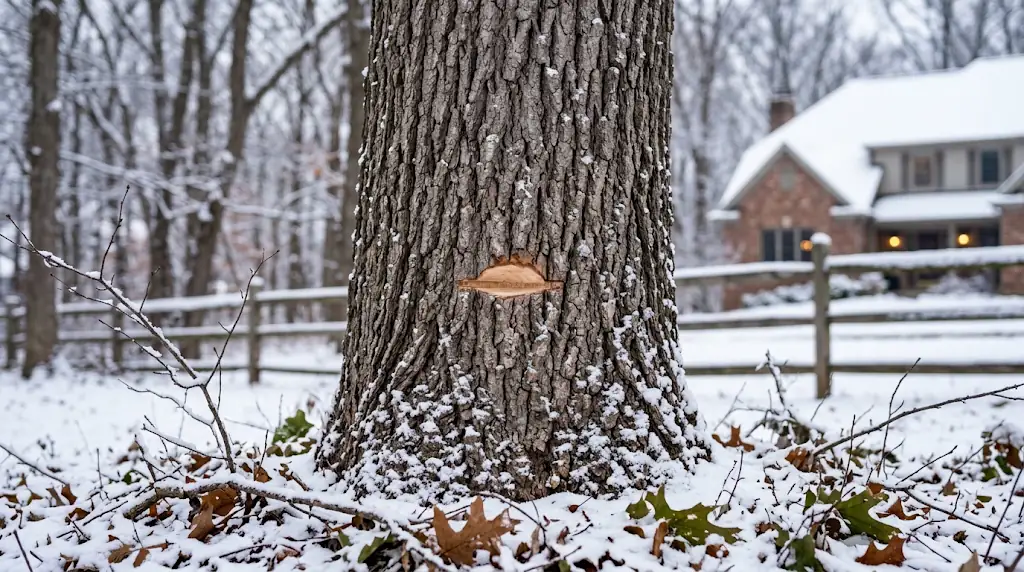
The safest season to cut down large trees across DuPage and Northern Will County is late fall through winter, specifically from November through March. During these dormant months, the ground freezes to support heavy crane equipment without tearing up lawns, defoliated branches offer clear visibility for rigging lines, and destructive regional pathogens like oak wilt and Dutch elm disease cannot spread.
Homeowners in Naperville, Aurora, Plainfield, Downers Grove, Wheaton, Lisle, and Bolingbrook often wait until late spring or summer to address dying trees. However, seasonal shifts in soil hydrology, sap circulation, and pest lifecycles make winter removals faster, safer, and structurally easier to execute.
Seasonal Comparison Matrix: Tree Removal in Northern Illinois
| Season | Ground & Soil Conditions | Canopy Visibility | Disease Vector Risk | Overall Job Safety Rating |
| Late Fall & Winter (Nov – Mar) | Hard, frozen topsoil; minimal lawn rutting | 100% bare branch structure; maximum line-of-sight | Near zero (beetles & fungal spores dormant) | Safest / Ideal |
| Early Spring (Apr – May) | Saturated, soft clay; high risk of soil compaction | Bud break; expanding leaf volume adds weight | High (oak wilt vector beetles become active) | Moderate (ground protection required) |
| Summer (Jun – Aug) | Dry, hard clay; heavy storm microburst risks | Full foliage sail; adds thousands of pounds in drag | Peak transmission for vascular fungal diseases | High hazard during heat and storm fronts |
| Early Fall (Sep – Oct) | Stable soil conditions; decreasing humidity | Leaves drying and beginning to drop | Tapering down, but fungal spores still circulate | Favorable for scheduled takedowns |
4 Reasons Winter Is the Safest Season for Large Removals
Removing a 60-to-80-foot mature hardwood involves balancing physics and mechanical leverage. Dormant-season removals provide clear physical advantages:
1. Frozen Ground Protects Residential Turf
Large removals require substantial machinery, including 40-ton cranes, spider lifts, skid-steer loaders, and heavy chip trucks. During wet spring conditions, DuPage County’s dense clay soil turns into mud, causing heavy tracks to leave deep ruts that destroy turf and crush shallow underground utility feeds. When the ground freezes solid in deep winter, heavy equipment can maneuver across yards with negligible turf damage.
2. Bare Canopies Reduce Weight and Wind Resistance
A fully leafed-out mature bur oak or silver maple carries thousands of extra pounds of surface foliage. In the summer, that heavy foliage acts as a massive sail, catching unexpected wind gusts and destabilizing branches while climbers are rigging them. In winter, deciduous canopies drop their leaves. The absence of foliage eliminates wind drag, reduces the total static load on rigging ropes, and provides ground crews and crane operators with an unobstructed line of sight into branch crotches.
3. Dormancy Halts Dangerous Pathogen Transmission
Pruning or cutting hardwoods during warm months invites fatal insect-borne diseases:
- Oak Wilt: Sap beetles carry the fungal pathogen Bretziella fagacearum directly to fresh wood cuts between April and October. Guidelines from The Morton Arboretum strictly recommend avoiding cuts or non-emergency removals near healthy oak groves during the active growing season.
- Dutch Elm Disease: Elm bark beetles thrive in warm weather, homing in on the scent of exposed vascular wood.
- Winter Protection: In winter, biting insects and sap-feeding beetles are completely inactive. Taking down a diseased tree while it is dormant prevents pests from fleeing the disturbed wood and infesting adjacent healthy hardwoods on neighboring properties.
4. Brittle, Rotting Trees Are More Predictable in Cold Weather
Dead ash trees killed by emerald ash borer become dangerously soft and spongy during wet, warm months, causing hinge wood to tear unpredictably during felling cuts. Frozen, dormant wood retains a more consistent structural rigidity, giving arborists cleaner directional control during complex, section-by-section dismantling.
When Summer or Storm Season Removals Cannot Wait
While winter offers the best operational conditions, you cannot always wait for freezing temperatures:
- Severe Storm Damage: Northern Illinois summer thunderstorm fronts and microbursts frequently crack trunks, leaving suspended heavy branches resting on utility lines or overhanging rooflines. These hazards must be cleared immediately, regardless of temperature.
- Sudden Root-Plate Uplift: A tree actively uprooting and tilting toward a home after a summer deluge cannot wait for winter dormancy. Crews mitigate summer soil damage using heavy composite ground protection mats (swamp mats) to distribute vehicle weight across lawns.
Commercial and Seasonal Pricing Advantages
Winter is traditionally the non-peak season for local arborists. Because standard lawn maintenance, fertilization, and landscape planting halt during Northern Illinois winters, tree service crews focus primarily on hazard mitigation, technical removals, and dormant canopy pruning.
Scheduling planned takedowns between late November and late February frequently results in:
- Faster Scheduling: Shorter lead times between the initial site assessment and crew mobilization.
- Lower Site-Impact Costs: Zero spend needed for sod repairs or extensive lawn remediation that often follows wet spring jobs.
- Convenient HOA Turnarounds: Most local Homeowners Associations in subdivisions across Bolingbrook, Plainfield, and Aurora process architectural tree replacement approvals faster during off-peak winter months.
Plan Your Winter Tree Removal
Proactively removing a dead, leaning, or structurally hazardous hardwood during the winter keeps heavy equipment off soft turf, eliminates fungal transmission risks, and protects your home before the spring storm season begins.
To schedule a dormant-season assessment and get an upfront, itemized quote for your property, contact the experienced team at Naperville Tree Removal directly through our contact page.