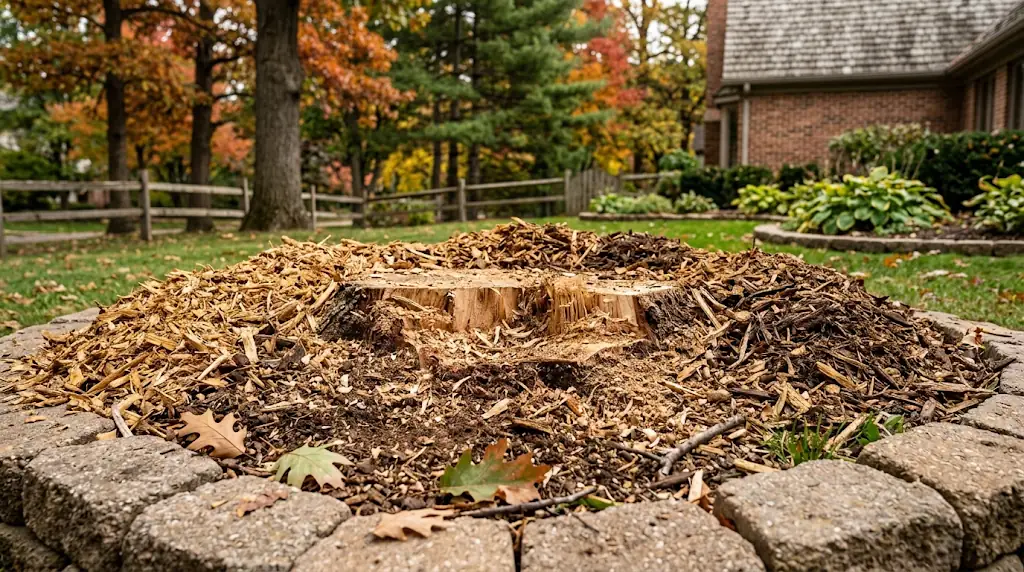
Stump grinding is almost never included in standard tree removal quotes across DuPage and Northern Will County; it is a separate service requiring dedicated machinery and independent pricing. Standard tree removal covers only felling the tree, hauling away limbs and trunk wood, and cutting the remaining stump as close to grade level as chainsaw clearance allows—typically 2 to 6 inches above the soil.
Every municipality in the area—including Naperville, Aurora, Plainfield, Downers Grove, Wheaton, Lisle, and Bolingbrook—shares the same operational reality: felling a tree and eliminating its root system require entirely different equipment, labor steps, and underground safety clearances. Understanding what goes into each process helps prevent unexpected costs, turf damage, and underground utility strikes.
Service Breakdown: Standard Removal vs. Stump Grinding vs. Complete Extraction
| Service Scope | Equipment Used | Depth Reached | What Happens to Debris? | Average Local Cost |
| Standard Tree Removal | Bucket trucks, cranes, rigging ropes, commercial chainsaws | Cut flush to ground (2″–6″ above grade) | Brush chipped, wood logs hauled away | $450 – $2,200+ |
| Stump Grinding | High-horsepower hydraulic stump grinder with carbide teeth | 6″ to 12″ below finished grade | Ground into wood mulch/soil mix; left in hole | $150 – $450 per stump |
| Full Root Extraction | Mini-excavator, backhoe, rigging chains | Entire root ball lifted out (2’–4’+ deep) | Entire root mass hauled away; large void left | $600 – $1,500+ |
Why Stump Grinding Is Billed Separately
Tree care companies separate stump grinding from tree felling for four specific operational reasons:
1. Different Machinery and Transportation
Cutting down a 60-foot oak requires chip trucks, brush chippers, aerial lifts, and rigging systems. Stump grinding requires a dedicated hydraulic grinder weighing anywhere from 1,500 to 4,000 pounds. These machines ride on their own trailers and cannot easily be transported or operated by the same primary felling crew on the same setup. Grinding is frequently handled by a specialized follow-up technician.
2. Mandatory Underground Utility Verification
State law in Illinois mandates that any mechanized soil penetration must be cleared through JULIE (Illinois One-Call) at 811 at least two business days prior to digging. Grinding teeth penetrate 6 to 12 inches below grade, which puts shallow gas lines, ComEd electrical service feeds, cable drops, and municipal water service lines at direct risk of being severed. A standard tree takedown above ground requires no JULIE ticket; grinding the stump does.
3. Variable Yard Accessibility
A tree’s upper branches may be accessible by crane from a paved suburban driveway in Downers Grove or Plainfield, but the stump itself might sit behind a 36-inch backyard gate, down a steep slope, or directly against a poured concrete patio. Navigating a heavy stump grinder into tight backyard spaces requires specialized track equipment, protective turf mats, and extra labor time that cannot be lumped into a flat felling rate.
4. Property Owner Preference
Not every property owner wants or needs a stump ground down. In wooded acreage lots along the DuPage River corridor or rear boundary lines in rural areas of Will County, property owners often choose to leave stumps flush with the dirt to decay naturally, avoiding the additional expense.
Factors That Dictate Stump Grinding Pricing
When you request a stump grinding add-on, local contractors evaluate four key variables:
- Diameter Across the Root Flare: Grinding is measured across the widest point of the stump flare at ground level, not the trunk diameter measured chest-high. A tree with a 24-inch trunk often has a 36-to-40-inch base where the roots spread out to meet the turf.
- Surface Root Spread: Aggressive native species like silver maples, cottonwoods, and willows produce extensive surface roots that snake through lawns 10 to 15 feet away from the base. Chasing and grinding these lateral roots to allow for future mowing adds to the machine run-time.
- Buried Debris and Inclusions: Stumps that have grown around metal property boundary stakes, old chain-link fence fabric, landscaping stones, or pea gravel dull and shatter carbide teeth instantly. Contractors inspect the base closely and charge extra if foreign debris requires tooth replacements.
- Depth Requirements: Grinding to a standard 4-to-6-inch depth is sufficient for laying topsoil and seeding grass. If you intend to pour concrete, install patio pavers, or replant another tree in the exact same footprint, the operator must grind 12 to 18 inches down, which takes substantially longer.
What Happens to the Grinding Debris?
Grinding a stump creates a large volume of combined wood shavings, shredded bark, and garden soil. A standard 30-inch hardwood stump generates roughly one to two pickup-truck beds worth of loose grindings.
Most base stump grinding quotes include backfilling the grindings into the crater to settle naturally, leaving a slight mound over the hole. If you want the shavings hauled off-site, fresh screened topsoil brought in, and grass seed or sod installed, confirm this in your quote beforehand. Hauling away the mulch and replacing it with topsoil is a separate line item that typically costs an additional $100 to $250.
What Happens If You Leave a Stump in the Ground?
Skipping stump grinding to save money can trigger long-term maintenance headaches:
- Pest and Insect Infestation: Decaying wood attracts subterranean termites, carpenter ants, and wood-boring beetles directly to your yard, posing a risk to nearby wooden fences, decks, and home foundations.
- Lawnmower Damage: Flush-cut stumps remain dense enough to ruin mower blades, bend crank spindles, or throw wood debris.
- Fungal Infection and Honey Mushrooms: Rotting root systems frequently sprout widespread rings of lawn fungus, armillaria mushrooms, and bracket conks that spread through your lawn and attack nearby healthy ornamental plants.
- Aggressive Sucker Regrowth: Species like green ash, boxelder, and willow will continuously push up dozens of rapid, woody suckers from the root plate, requiring constant cutting or repeated herbicide treatments to kill off the vascular system.
Get a Complete, Transparent Estimate
Whether you need a hazardous tree completely eliminated or want an old, unsightly stump ground below the lawn surface, you should always insist on an upfront, itemized proposal that clearly details both services.
For a free, detailed assessment covering tree removal, precision stump grinding, and full site cleanup, contact the team at Naperville Tree Removal through our contact page.